
The history of Dagbon chieftaincy conflict; and detailed research work
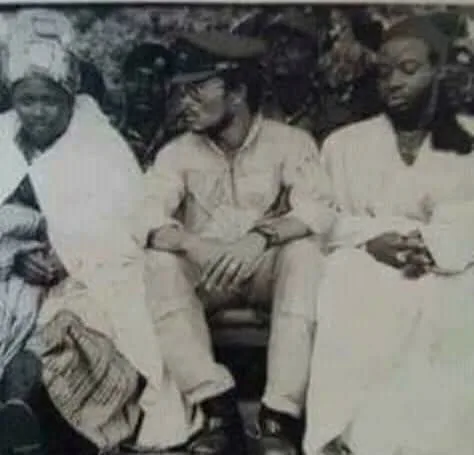
He traces the Dagbon chieftaincy crisis to 1954 when Ya-Na Abudulai, an Abudu, was enskinned as the overlord of Dagbon under the supervision of the British Colonial Administration. Following independence, there was a series of agitations in the Andani family, who were sympathetic to the Convention Peoples Party (CPP) government. President Kwame Nkrumah subsequently engineered the deskinment of Ya-Na Abudulai. This compelled the government to set up the Opoku Afari Committee and led to the promulgation of the Declaration of Customary Law (Dagbon State) Legislative Instrument 59 (L.I 59).
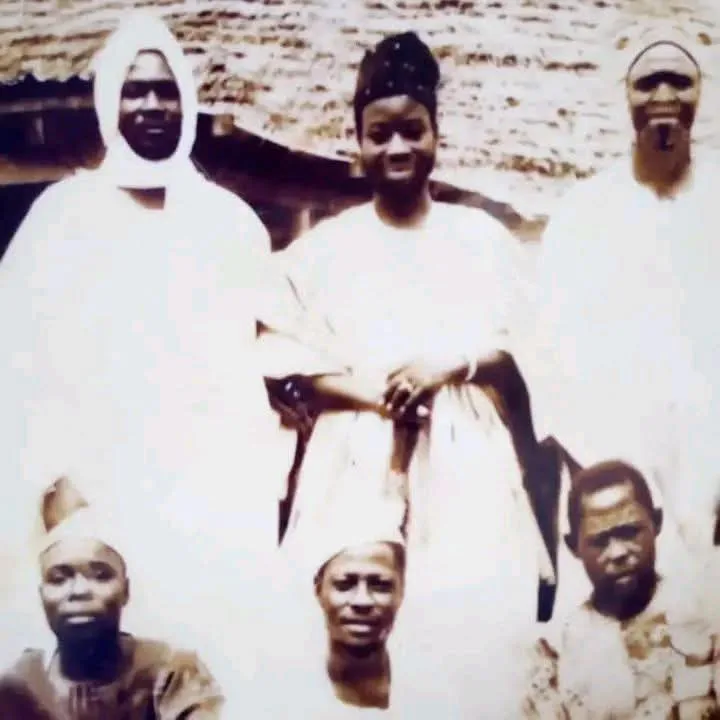
This proclaimed the Dagbon rotational system of succession as a mechanism to provide an equal opportunity for the legitimate family’s ascension to the skin.
Brobbey (2008) argues that a key criterion for the establishment of the rotational system was traceable historical evidence that each family, gate or house had occupied the stool or skin in accordance with the custom and tradition of the people. He concludes that the rotational system is not a panacea for chieftaincy conflicts in Ghana, because there are many examples where families with accreditation to ascend the throne, do not do so after failing to settle on a suitable nominee to occupy the traditional office.
The chieftaincy crisis deepened further in 1966 following the emergence of the National Liberation Council, a military government sympathetic to the Abudu family. The military coup d’état of 1966 introduced new dynamics into Dagomba State politics. In 1967, the National Liberation Council (NLC) set up the J.B. Siriboe and the Nene Azu Mate Kole Committee to study the chieftaincy dispute and to provide recommendations for future settlement. The Committee recommended the repeal of the Declaration of Customary Law (Dagomba State), Order 1960 (L1 59).
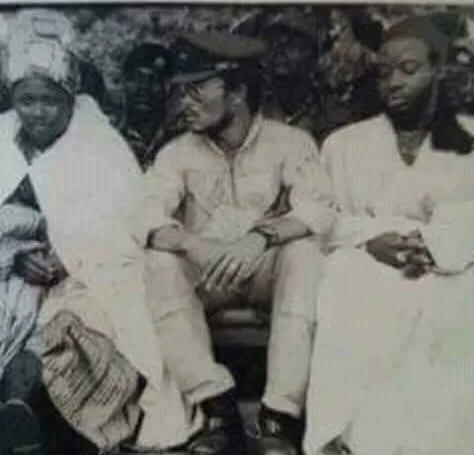
On 18 October 1968, the NLC promulgated NLCD 296 which repealed the Customary Law (Dagomba State) Decree 1968, (NLCD 281) and Customary Law (Dagomba State) Order, 1960 (L.I 59).
The Decree abolished the rotational system established by President Nkrumah. During the NLC period, the Yendi Skin witnessed both the enskinment and death of a Ya-Na. At the end of the regime, Ya-Na Mahamadu Abudulai was enskinned as Ya-Na.
The National Redemption Council, on assuming office after the military coup in 1972, engaged Nii Amaa Ollenu to investigate the Dagbon conflict – under the Yendi Skin Affairs Committee of Inquiry. The recommendations of the Committee led to the promulgation of NRCD 299 on 5 November 1974. The Decree declared as invalid the nomination, selection and enskinment of Mahamadu Abudulai as Ya-Na and Paramount Chief of the Dagbon State. The Decree further proffered conviction of a term of imprisonment not exceeding ten years to Mahamadu Abudulai and any person or group of persons who recognise him – to imprisonment for not more than three years. Subsequently, the NRCD 299 recognised Yakubu Andani II as Ya-Na and Paramount Chief of Dagbon.
The nature and the wording of the NRCD 299 was anathema to the customs and traditions of Dagombas in particular, and Ghanaians in general. Inasmuch as the NRC sought to bring peace to the Dagbon State, there were inherent contradictions associated with a post-colonial state. The deskinment of the late Mahamadu Abudulai and the enskinment of Yakubu Andani II and the provision to imprison a sitting and now a former Ya-Na who was uncustomarily removed, did not respect the reverence accorded to members of royal families irrespective of the hierarchy of position they occupied at any given time in the Ghanaian society. The nature of the punishment sought for the Ya-Na ought to be considered malicious and repugnant, and is not a durable peace-seeking strategy.
The establishment of the Ollenu Committee and the further promulgation of the NRCD 299 was part of the grand scheme of the military regime to seek political legitimacy from the people through demonisation of programmes and policies of the previous regime. Oquaye (1980:16) notes: “Acheampong made every effort to discredit the Busia administration in every material way.” This included cancellations of all Busia administration policies, which were described as schemes to discredit the previous administration and as justification for the overthrow that occurred.
On 8 September 1979, the Armed Forces Revolutionary Council (AFRC) repealed the Yendi Skin Affairs (Appeal) Degree 1979, S.M.C.D (238) through the AFRCD 32. The Peoples National Convention, which took over power from the AFRC, did not initiate and implement any mechanism to improve the Dagbon chieftaincy problem. The status quo remained until the inception of the new regime.
The Provisional National Defence Council, through the PNDCL 82, repealed the NRCD 299 and the recommendations of the Ollenu Committee. This paved the way for the Abudulai family and Mahamadu Abudulai to challenge the deskinment in court an appeal court in accordance with the Court of Appeal Rules, 1962 (L.I 218). The PNDCL 82 provided further reasons for the aggrieved party or family to proceed to the Supreme Court for final redress.
The Abudulai family and Mahamadu Abudulai appealed to the Court of Appeal in accordance with the law. The Court of Appeal rejected the recommendations and conclusions of the Ollenu Committee, thereby granting relief to the family. However, thereafter, on appeal from the Andani family, the Supreme Court overturned the ruling – subsequently sustaining the Ollenu Committee recommendations and conclusions. The fundamental issue was establishing the legality and appropriateness of the selection committee that nominated Ya-Na Mahamadu Abudulai to the Yendi Skin.
The Supreme Court, in order to contribute to the development of the chieftaincy in the Dagbon Traditional Area and to position future perspectives regarding the successions of the Yendi Skin, ordered that: … having regard to Dagbon Constitution that deskinment is unknown in Dagbon, all persons who have ever occupied the Nam of Yendi shall without regard to how they ceased to be Ya-Na be regarded as former Ya-Nas. Consequently, their sons do qualify for appointment to the gate skin of Savelugu, Karaga and Mion.
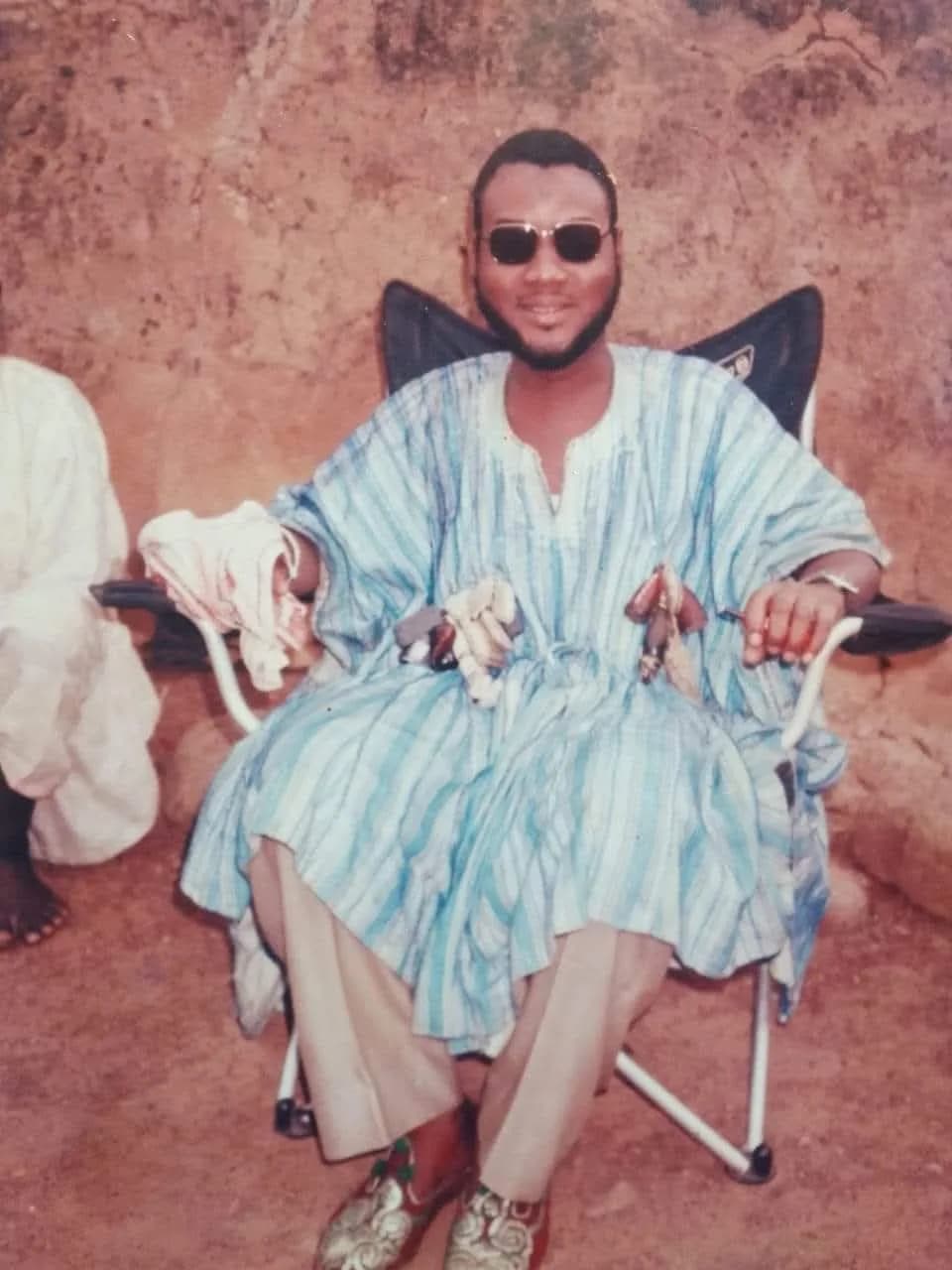
This ruling by implication means that sons of all former Ya-Nas qualify to be future Ya-Nas through the gate skins of Savelugu, Mion and Karaga.
The Provisional National Defence Council (PNDC) government respected the decisions and judgments of the judiciary; consequently, the PNDC recognised and supported Ya-Na Yakubu Andani II as the legitimate Paramount Chief of the Dagbon Traditional Area. The government then set up a reconciliatory committee in 1987, chaired by Mr E.G. Tanoh, for the rapprochement of the Andani and Abudulai families, and for the peaceful coexistence and development of Dagbon in the future.
The reconciliation committee managed to bring the two families together to agree on the future of Yendi Skin affairs. The families led by Ya-Na Yakubu signed a Memorandum of Understanding (MoU) to implement all the elements in the supreme court judgment. A key component of the judgment and of the MoU was to be implemented and respected by all parties. This was the treatment of Mahamadu Abudulai as a former Ya-Na in the event of death, especially burial and funeral rite celebrations. On 16 October 1988, Ya-Na Abudulai died. The family informed Ya-Na Yakubu but he failed to respect the MoU signed by him.
Exercising the state power of coercion and overcoming several attempts at resistance, the PNDC government compelled the Ya-Na Yakubu to allow the Abudulai family to bury the late Mahamadu – after the third day and against Islamic custom and tradition. The Ghana Armed Forces and Ghana Police Service supervised the burial with the instituted dusk-to-dawn curfew in Yendi. The Abudu family were not allowed by the Ya-Na Andani to perform the final funeral rites after the burial. The Asantehene and the Head of State, Flt Lt J.J. Rawlings made a series of appeals, but the Ya-Na refused the Abudu family the opportunity. They consequently nurtured and harboured animosity to the Ya-Na Yakubu and waited for an opportunity to perform the funeral rites of Mahamadu Abudulai
lasting solution to the crisis.
Following the recommendation of the Wuako Commission, the government further instituted the Committee of Eminent Chiefs (CEC) to mediate the conflict by establishing an appropriate traditional process for finding a permanent solution to the crisis. It would be a solution which the two families would recognise, appreciate and accept as the final roadmap for peace in Dagbon. The establishment of the CEC corroborates Owusu-Mensah’s (2014) conception of the duality of the political system of Ghana, where a traditional system is contextualised within modern democratic governance structures.
In 2018, the CEC, chaired by the Asantehene, presented to the AkufoAddo government the road map for peace in Dagbon. However, even before the recommendations in the report were executed, there had been opposition to the activities of the Committee, particularly from the incumbent regent. The Regent of Dagbon, Kampakuya-Naa Andani Yakubu Abdulai, raised a litany of concerns about the mediation process to bring peace to Dagbon. The Regent shared his observations that the customs and traditions of Dagbon had been ignored by the CEC tasked with mediating the March 2002 political crisis.
The Regent accused the Otumfuo Committee of bias against the actual kingmakers of Dagbon, because according to him, their roles in the kingdom had been usurped by an advisory council of elders. He contended that the kingmakers initially expressed reservations about the creation of the advisory council of elders that undermined the customs and old traditional institutions of Dagbon. According to the Regent, the Committee’s recommendations appear to be in sharp contrast to the well-established customs and traditions of Dagbon.
The Regent further contended that the CEC had no rights to determine the installation of a Regent for Dagbon and should not have exercised/ assumed such a right. The Regent posited that it was an insult to Dagbon and the State of Ghana that the eminent chiefs had usurped a prerogative over Dagbon that even the government, which appointed them, cannot claim or arrogate to itself under the Constitution.
Source: Northwebonline.com