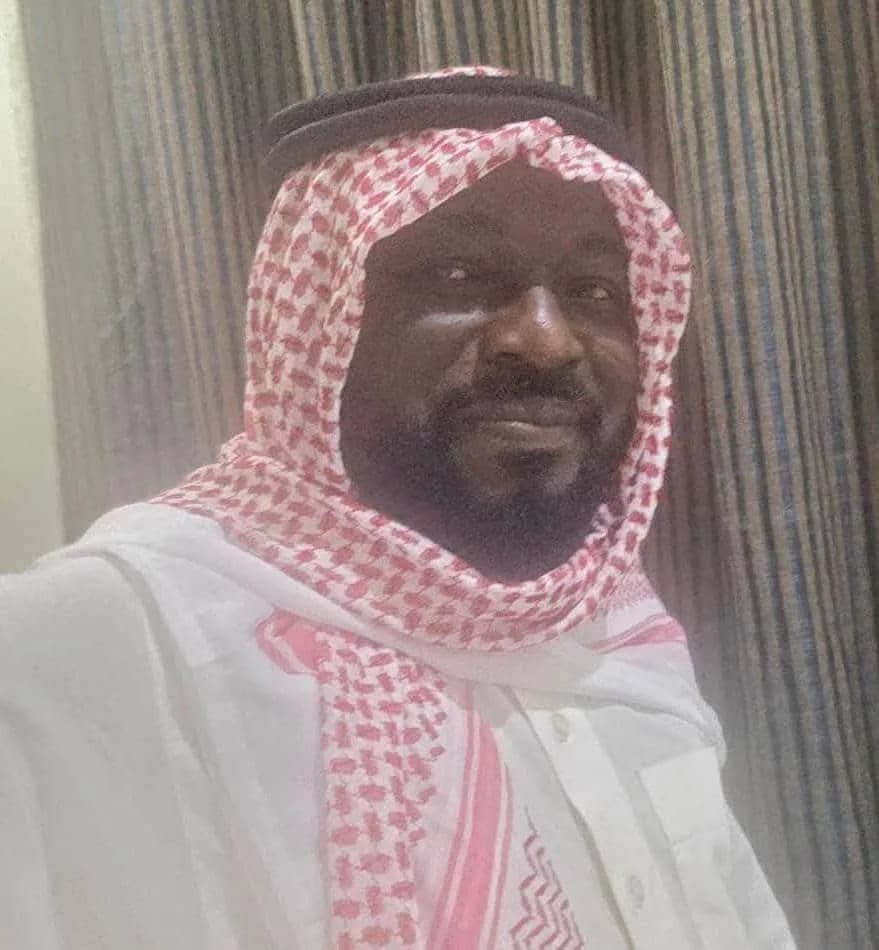
A brief history of the Jamong royal family of Bunkprugu
A BRIEF HISTORY OF THE JAMONG ROYAL FAMILY OF BUNKPURUGU
The history of the Jamong family, widely regarded as the foundational royal lineage of Bunkpurugu, is deeply rooted in migration, kinship, and the enduring traditions of chieftaincy in the northern territories of present-day Ghana.
Oral tradition traces the origins of this lineage to a man known as Jamong, who lived in what is now modern-day Togo. Born into the household of Nyaan, Jamong was the youngest of seven children and the only son of his mother. His birth name was Siknan—meaning “came down with it”—but he came to be widely known by the name Jamong, a nickname inspired by his notably fair complexion.
Despite his favored position in his father’s household, this distinction bred tension among his elder brothers, who perceived that their father’s affection leaned more heavily toward him (similar to the story of Joseph and his older brothers in Bible history). These growing tensions eventually compelled Jamong to separate from the family household and establish his own settlement. In time, he founded a new community known as Lopanu, meaning “New Luok,” a reference to the original Luok clan established by his father, Nyaan.
Jamong settled in Lopanu with his children—Kpinkpadano, Japeung, Kanjuan, and a daughter, Boanu. It was through his descendants, particularly his lineage of hunters, that the family’s influence would extend into new territories. Jamong's older son, Kpinkpadano, who is remembered for his hunting prowess, ventured into the dense forests and escarpment of the region and located Bunkpurugu and other areas.
As the family expanded, leadership began to consolidate. Toojak, the first son of Kpinkpadano, emerged as a central figure in the establishment of Bunkpurugu. His first son became the first chief, known as Jamung Toojak, and led his people with authority and pride. Upon his passing, leadership passed to his younger brother, Yoagbat Toojak, followed by Nyankpen Libakitib, who became the third chief. Notably, all three early rulers of Bunkpurugu hailed from the Jamong lineage, reinforcing its status as the recognized royal family.
However, the succession was not without contest. Before the enskinment of Nyankpen, a man named Taapang Lambon of the Jafok family was installed as chief by the Nayiri in 1969. But the people of Bunkpurugu rejected this enskinment on the grounds that he did not belong to the Jamong royal lineage. Consequently, he was deskinned by the same Nayiri who had installed him, and Nyankpen Libakitib was subsequently enskinned, restoring the traditional line of succession.
Following Nyankpen’s death, Taapang Lambon re-emerged, this time wielding considerable political and military influence as a former District Commissioner, supported by a military presence in the area. Unable to resist this forceful return, the Jamong family turned to legal and governmental channels, petitioning the PNDC administration and pursuing justice through the courts. Our case was notably represented by the distinguished lawyer and former Speaker of Parliament, The Right Honourable Peter Ala Adjetey of blessed memory. The legal dispute persisted until the death of Taapang Lambon.
In the years that followed, assurances were given by the reigning Nayiri to rectify what was widely seen as a historical injustice. Yet, contrary to these expectations, another member of the Jafok family, Alhaji Abuba Nasinmong, was enskinned as chief, after the official date of enskinment was changed without the knowledge of our family. The Jamong family, maintaining their long-standing commitment to lawful and peaceful resolution, refrained from violence and instead brought the matter before the Northern Regional House of Chiefs in 2009.
After a decade of deliberation, the House of Chiefs, in August 2019, declared the enskinment of Alhaji Abuba null and void. An appeal to the National House of Chiefs yielded the same outcome, reaffirming the earlier judgment and reinforcing the legitimacy of the Jamong claim.
It is worth noting that disputes over the Bunkpurugu skin date back even further. Following the death of the first chief, Jamong Toojak, one Parimaak Jajing of the Jafok family sought to contest the succession. The matter was referred to the Nayiri’s palace, where, after due consideration and consultation with stakeholders of the Luok clan, it was affirmed that Jamong Toojak was the original settler and that the right to the skin rested solely with his descendants.
This historical narrative underscores a central principle within the traditional chieftaincy system: that legitimacy is derived from lineage. For the people of Bunkpurugu, the Jamong family represents not merely a genealogical line, but the very foundation upon which their traditional authority is built. As such, the longstanding position remains that chieftaincy is determined by bloodline rather than affiliation, and that respect for established custom is essential for unity and progress within the community.
We wish to place on record that Jamung Toojak was already a chief before the arrival of the colonial authorities in Bunkpurugu in the 1920s. The subsequent imposition of the Nayiri’s authority was, in our understanding, part of the colonial administration’s system of indirect rule. Documentary evidence exists to substantiate this historical account and will be made available to the public at the appropriate time.
To those intent on maliciously distorting history, our concern is simply to preserve the authentic history of our family and to establish the true origins of Bunkpurugu. Anyone seeking the history or traditional skins of Luok should look to their proper historical setting in Nung, Burkina Faso, rather than attempting to relocate them to Bunkpurugu.
BUNKPURUGU WILL NOT BE SHARED WITH ANYONE. OUR NO MEANS EXACTLY WHAT IT IS— NO!!
SIGNED:
—Jamong Royal Family