
Self-Debate on the history context of Hajj pilgrimage in Ghana
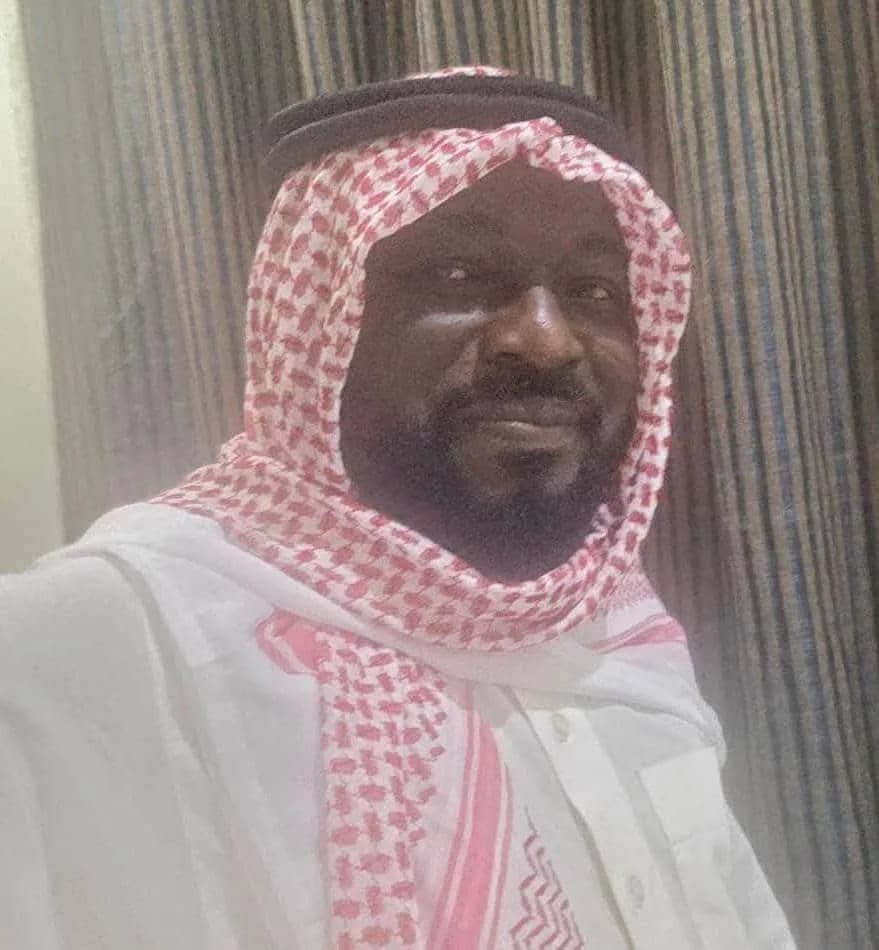
SELF-DEBATE ON THE HISTORICAL CONTEXT OF HAJJ PILGRIMAGE IN GHANA:
15-08-2026.
By Mohammed Amin Lamptey Hussein
PAOG,Director of Communication.
Preamble:
The management of Ghana's Hajj pilgrimage since independence has evolved from decentralized, private travel arrangements into a centralized, state-facilitated operation overseen by the Pilgrims Affairs Office of Ghana (PAOG)/ Hajj Board under the Ministry of Foreign Affairs.
Historically, many West Africans, including Ghanaians traveled to Mecca for Hajj by road and foot across the African continent before commercial air travel became common.
Prospective pilgrims walked or used camels and local transport,traveling across West and Central Africa through countries like Nigeria,Chad, and Sudan, before crossing the Red Sea to reach Saudi Arabia.
The journey took many months or even years.Some pilgrims on transit, worked, or settled in intermediate countries along the Hajj route (such as Nigeria,Niger,Sudan or Chad) for years to earn enough money to continue or to complete the pilgrimage on their way back. With the shift to aircraft,modern Hajj operations from Ghana are organized and airlifted via scheduled flights managed by the Pilgrims Affairs Office of Ghana(PAOG) departing from hubs like Accra and Tamale.
Historical evolution & Institutionalization of Hajj pilgrimage:
With early post-Independence era, Hajj traveling processes from Ghana were largely uncoordinated, relying on maritime travel or sporadic commercial flights, with individual private operators handling logistics,visa issuance and pilgrims management.
Hajj pilgrimage situation in the 70s:
During the 1970s under military Head of State General Ignatius Kutu Acheampong, the Hajj pilgrimage situation in Ghana was marked by growing state centralization, severe foreign exchange restrictions, and localized logistics crises. As Chairman of the National Redemption Council (NRC) and later the Supreme Military Council (SMC I) from 1972 to 1978, Acheampong’s economic nationalism and the country’s spiraling inflation heavily impacted Ghanaian Muslim pilgrims.
The Hajj pilgrimage situation unfolded through specific developments during this era with tight economic control. The Acheampong regime suffered severe foreign exchange shortages because the government strictly regulated the distribution of foreign currencies, procuring the Saudi Riyals or US Dollars required for Hajj travel became exceptionally difficult.
The rise of Hajj Committee:
With the broad-based idea to seeking greater administrative oversight, the Acheampong government began formalizing state control over Hajj affairs. This era laid the groundwork for centralized tracking of pilgrims under government-appointed boards to replace unregulated private travel agents.
The National Airline for Hajj:
As part of efforts to cushion Ghanaian pilgrims regarding airlifting,they were legally required to fly via the state-owned Ghana Airways. However, the airline's limited fleet often struggled with overcrowding,mechanical failures, and major scheduling delays at Kotoka International Airport-now Accra International Airport.
The 1970s Stranding Incident:
Due to poor economic planning, a major administrative breakdown occurred mid-decade when hundreds of Ghanaian pilgrims were stranded.The state failed to meet its logistical obligations, threatening to leave travelers stuck either in Accra or Jeddah.
Verifiable information available indicates that the late Sheikh Abdullahi Maikano of blessed memory during one of the most critical Hajj breakdowns of the Acheampong era, and as a prominent Islamic cleric,he stepped in by utilizing his leadership influence and direct community mobilization, and negotiated with authorities and salvaged the journey for many distressed Ghanaians prospective pilgrims.
Establishment of Hajj Boards:
As part of efforts to stabilize hajj operations in Ghana successive governments instituted bodies like the National Hajj Council (Ghana Hajj Board) to streamline operations, negotiate quotas with Saudi authorities, engagement with hajj stakholders on accomodation,transportation,feeding,aircraft,and help curb logistical chaos.
A major milestone was the introduction of direct flights from the Tamale International Airport for pilgrims from the Northern sector,reducing domestic transit stress,acute, episodic acute, chronic, emotional, physical, environmental,and psychological stress.
Proactive Leadership & Digitization:
The Pilgrims Affairs Office of Ghana(PAOG) Chairman, Alhaji Abdul-Rauf Tanko Ibrahim and his team of Hajj Board members focused on digital integration for Hajj 2026 as introduced by Saudi authorities to help reduce registration bottlenecks and enhance transparency.Delay in Hajj fare payments and over subscription have been a perennial challenges of hajj operations over the years,until a mechanism was developed with the bankers,Ghana Commercial Bank(GCB) to help prevent delay and partial payments as well as fraud by scammers.
Fare Adjustments:
One of the major challenges faced by Ghanaian Muslims when it comes Hajj pilgrimage,is the cost and the possibility of all payed prospective pilgrims to travel for the spiritual journey to the Kingdom of Saudi Arabia.Concerted discussions and negotiations with service providers in Ghana and Saudi Arabia saw national package fees reduced.
Recent Hajj fare history in Ghana:
1. 2024 Fare: GHC 75,000 (previous administration peak)
2. 2025 Fare: GHC62,000 (reduced by current administration)
3. 2026 GHC60,000(Current administration)
4. 2027 Fare: GHC60,000 (current/maintained rate) for tseason 2027 hajj season, positioning it competitively within the West African sub-region.
Hajj Pilgrimage During Rawlings era:
Organizing the Hajj pilgrimage during the era of flight lieutenant Jerry John Rawlings (spanning his military rule under the PNDC from 1981 to 1992 and his democratic presidency from 1993 to 2001) involved state facilitation alongside evolving administrative bodies like the national Hajj Council or Board.
The Rawlings government oversaw and facilitated logistics, passport processing, and negotiations with Saudi authorities, though operations often faced logistical and financial hurdles before reforms in later years.
According verifiable reports, despite early revolutionary tensions and strict state regulations on religious bodies in the 1980s, Islam alongside with Christianity and traditional beliefs found recognized space in national public life and state recognition of Islamic festivals like Eid ul-Adha and Eid ul-Fitr.
Hajj pilgrimage during the era of President Kufour:
During the administration of President John Agyekum Kufuor (2001–2009), Ghanaian Hajj pilgrims experienced both significant government support during crises and improvements in pilgrimage organization.
Uncontested information available indicates that President Kufuor's government provided $600,000 to assist stranded Ghanaian Hajj pilgrims who faced severe logistical difficulties.He set up a Hajj Fact-Finding Committee to investigate challenges and recommend better future operations.The 2007 flight crisis intervention- about 2,700 Ghanaian pilgrims faced the risk of missing the pilgrimage after flight arrangements were disrupted and delayed due to clearance and airline issues.With high sense of urgency, President Kufuor directly intervened through diplomatic engagements, securing flight arrangements and deadline extensions from Saudi authorities to airlift the stranded Ghanaian Muslim citizens.
Hajj Pilgrimage During the era of President Mills:
During the presidency of Professor John Evans Atta Mills (January 2009 – July 2012), the organization of the Hajj pilgrimage in Ghana underwent significant political,stracture,administrative and logistical changes aimed at eliminating perennial setbacks like stranded pilgrims, theft,and health crises.
Establishment of Hajj Village Concept:
Before 2009, Ghanaian pilgrims faced severe hardships, sleeping in the open at the El-Wak Stadium or the Accra International Airport.Many faced theft, exposure to the weather, and health issues as dehumanization before departure.
The Mills administration, alongside Vice President John Dramani Mahama(now President) partnered with the Ghana Airports Company to institutionalize the first Hajj Village near the airport,having started at El-Wak and later moved to Ghana Cultural Center at Kanda.
The newly Hajj village concept supervised by President Mahama provided clinic, mosque, temporary warehouses,running water, washrooms,toilet facility,car parking lot and makeshift market This significantly innovation restored dignity,reputation and integrity of Ghanaian Muslims.
Commercialization and Pitfalls:
President Mills explicitly spoke against the over-commercialization and exploitation of the sacred pilgrimage.He respectfully demanded that the National Hajj Planning Committee focus on spiritual cleansing over profiteering.Despite structural enhancements, operations faced structural hurdles.The 2010 Hajj season suffered major administrative bottlenecks, leaving about 600 prospective pilgrims stranded at the Hajj Village because they could not secure flights before the Saudi airspace closure.
In an unprecedented move during the 2010 Eid ul-Adha celebrations at Independence Square, President Mills publicly admitted the blunders, thanked the National Chief Imam for intervening to calm frustrated pilgrims, and committed to institutional changes.President Mills changed the government's approach on Hajj operations from reactive managing to proactive planning:
In early 2011 and 2012, Presidnt Mills held multi-faith state thanksgiving sessions at the Abossey Okai Central Mosque where he directed Muslim leaders to begin Hajj planning months in advance.Since then,the government continued to offer logistical assistance to the Pilgrims Affairs Office of Ghana but proactively policed its teamwork,transparency, demanding fairness, truth, and objectivity to prevent complaints before and during the Hajj rituals and after the season ended.
Ghana Hajj operations under President Mahama:
It's important to state that President John Dramani Mahama came back to the presidency to continue with what he started as the Vice President,President and now substantive president of yhe republic of Ghana .
President John Dramani Mahama's administration has reduced the 2026 Hajj fare to GHC60,000 and improved pilgrimage logistics for Ghanaian Muslims.
President Mahama lowered the Hajj pilgrimage fee from previous highs of GHC75,000 down to GH¢62,000 for initial operations, and further down to GHC60,000 for the 2026 season and retained it for 2027 Hajj pilgrimage to help ease financial burdens on families especially the poor.
President Mahama constituted a newly Hajj Governing Board-Pilgrims Affairs Office of Ghana chaired by Alhaji Abdul-Rauf Tanko Ibrahim with experienced and qualified Hajj board members to manage operations,logistics, transparency, and prevent the exploitation of pilgrims.
Permanent Hajj Village:
President being the initiator of Hajj village under President Mills decided on building a permanent Hajj Village in Accra in Accra, funded entirely through internally generated funds by the Ghana Airports Company Limited (GACL) to serve as a specialized pre-departure terminal for Hajj pilgrimage to help preserve the sanctity of Ghanaian Muslims and Ghana as a nation with international repute.
In the history of Ghana Hajj Pilgrimage,approximately 6,900 Ghanaian pilgrims were successfully airlifted for the 2026 Hajj operations, filling the designated national quotas and meeting favorable reviews regarding visa issuance,medical screening,documentation,traveling processes, accommodation and transportation.
Leadership Commendation:
President John Dramani Mahama and the National Chief Imam, Sheikh Dr. Osman Nuhu Sharubutu, praised the Pilgrims Affairs Office of Ghana(PAOG) under the watch of Alhaji Abdul-Abdul-Rauf Tanko Ibrahim for organizing one of the smoothest and most professional exercises in recent years, despite the sad passing of five(5) pilgrims.The least of death casualties in the history of hajj pilgrimage in Ghana.
Conclusion:
It's imperative as Ghanaians we eschew religious issues related to state funding of religious facilities or infrastructure or pontificating government subsidies to Muslims for the hajj pilgrimage.Majority of Muslims pay their own Hajj fare with a few being supported by their loved ones,employers,politicians and what have you.
The argument on the newly constructing multipurpose Hajj Village,building of mosques and cathedral in Ghana should be given a befiting intellectual analysis and discussion to help prevent unnecessary grudges that could affect the tranquility and unity Muslims and Christians are enjoying in Ghana.
Feedback is one of the most sensitive processes in communication.With the rise of internet,technology and now Artificial Intelligence(AI),proactive communication is very much needed to help preserve the sanctity of our various religious beliefs and our nation Ghana.
Yes,it's very easy to hurt people with critism,but false false compliments are also unhelpful and dehumanizing.Harsh criticisms damage our self-esteem, and can lead us to make unwise choices in our reactive comments.
Most destructive critics on hajj operations in Ghana,failed to delve into the historic facts of hajj operations to help feed them with the required information and wisdom to share their perspectives in a constructive manner regardless of their ulterior motives.Most of them are prone to being critical, as it gives them a feeling of superiority.They always feel like the need to crush bad or weired ideas.
According to some experts in crisis management and crisis communication, feedback can be analyzed along two axes.It can be negative or positive and constructive or destructive. Whereever you are or find yourself and about to give feedback on any issue,ask yourself: How can I make this idea better? Rather than this idea is bad.